 blog
blog
How to Choose Professional Song Mixing Services
Table of Contents
- Why Professional Song Mixing Services Matter for Your Release
- What to Look for in a Professional Mixing Engineer
- What to Send to a Mixing Engineer: A Beginner's Checklist
- Understanding Song Mixing Turnaround Time and Delivery Specs
- The Music Mixing Revisions and Feedback Process Explained
- Comparing Mixing Services Side by Side: A Simple Framework
- Red Flags and Payment Safeguards When Hiring Mixing Services
- Why Choose Slick Sound Productions for Your Song Mixing Services
- Frequently Asked Questions
Last Updated: October 18, 2026
Why Professional Song Mixing Services Matter for Your Release
Great songs can fail on a rough mix.
Mixing is the stage where balance, clarity, and depth come together. It decides whether your track sounds release-ready or unfinished.
A professional mix does a few things a home setup struggles to match:
- Frequency balance across the full spectrum
- Vocal tuning and processing that keeps emotion intact
- Compression and equalization that add punch without squashing life
Choosing the right engineer is a decision you make once per song.
Below, we'll walk through exactly how to judge an engineer's sound, what to send, and how to compare options before you commit.
What to Look for in a Professional Mixing Engineer
Look for three things first: a portfolio that matches your genre, clear communication, and a defined revision policy. Skills matter, but so does fit. An engineer who mixes heavy rock all day may not be the best match for a soft acoustic ballad.
Here's what separates a good hire from a great one:
- Genre experience with your musical style
- A clear process for receiving stems and delivering files
- Reliable communication and response times
Evaluating Mixing Engineer Portfolio Examples
Listen to previous work with intent. Don't just ask "does this sound good?" Ask whether the mix serves the song. Good portfolio examples show range, consistency, and control.
Try this quick test:
- Pick two or three tracks from their portfolio in your genre.
- Listen on headphones, then on a phone speaker.
- Note the vocal balance, low-end clarity, and overall loudness.
- Check whether each mix feels finished, not just loud.
If every track sounds identical in style, that's a warning sign. You want an engineer who adapts to the artist's vision, not one who stamps their own sound on everything.
How to Assess a Mix Sample Fairly
Judge a sample against the song's goals, not against your favorite record. A fair assessment compares the sample to the raw stems, not to a polished major-label track with a different budget and intent.
Ask yourself:
- Does the vocal sit forward without feeling harsh?
- Is the low end tight and controlled?
- Do the instruments have space and depth?
What to Send to a Mixing Engineer: A Beginner's Checklist
Send clean, labeled track stems at the highest sample rate you recorded, plus a reference track and clear notes. That single package prevents most back-and-forth later.
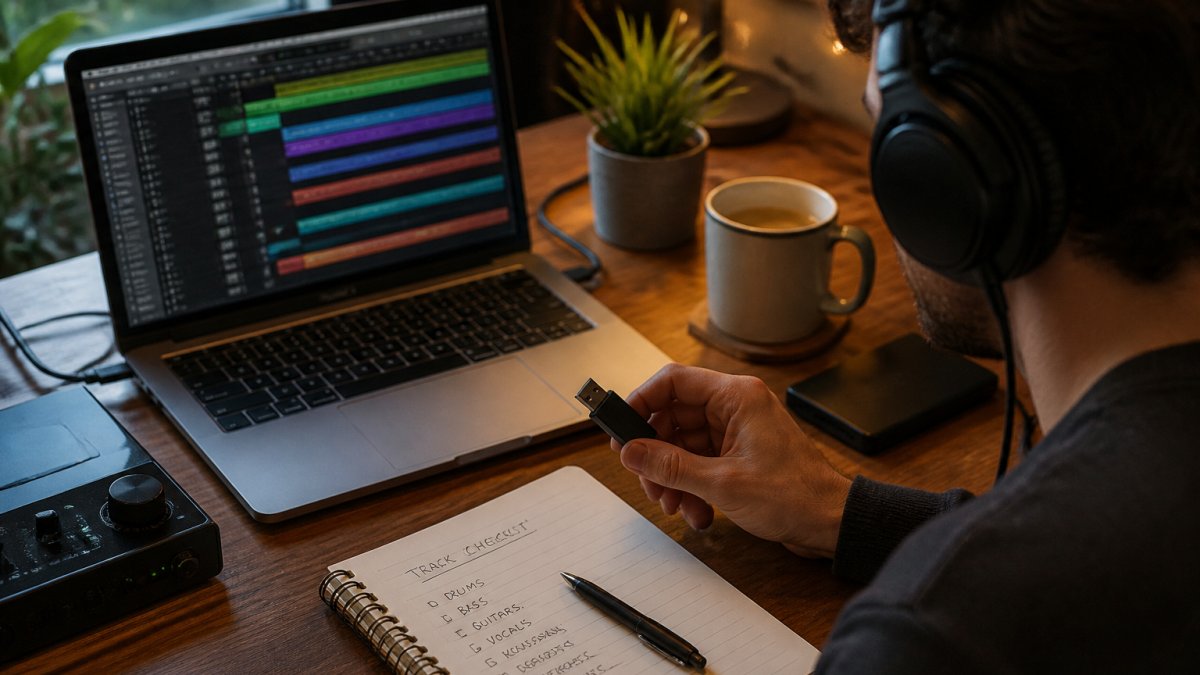
Use this checklist before you upload:
- Track stems exported from bar one, all the same length
- Every file clearly labeled (kick, snare, lead vocal, and so on)
- No master-bus processing baked into the stems
The reference track is the most overlooked item. It tells the engineer what "finished" means to you. Skip it, and you're asking them to guess.
Understanding Song Mixing Turnaround Time and Delivery Specs
Turnaround time depends on project size, revision rounds, and the engineer's current queue. Ask for a firm delivery date in writing before you pay, and confirm the file formats you'll receive.
A typical mixing project moves through a few stages:
| Stage | What Happens | What You Provide |
|---|---|---|
| Handoff | Stems and notes reviewed | Labeled stems, references |
| First mix | Balance, tuning, cleanup | Clear feedback window |
| Revisions | Adjustments per notes | Specific, consolidated notes |
| Delivery | Final files exported | Confirmation of formats |
Delivery specs to confirm up front:
- File format (WAV is standard for release)
- Sample rate support for your distributor
- Instrumental and alternate versions if you need them
The Music Mixing Revisions and Feedback Process Explained
The revisions and feedback process is where your mix goes from good to right.
Good feedback sounds like this: "Pull the vocal up slightly in the second verse, and tame the cymbals in the chorus." Vague notes like "make it punchier" force the engineer to guess.
A smooth revision loop looks like:
- Listen to the first mix on several systems.
- Write notes by timestamp.
- Group all notes into one message.
- Let the engineer apply changes.
- Review the revision and confirm or request the next round.
Clear communication here saves everyone time. It also keeps the collaboration focused on the song, not on logistics.
Comparing Mixing Services Side by Side: A Simple Framework
Most guides tell you to compare portfolios and prices. That advice is fine, but it leaves you staring at five tabs with no way to decide. This section gives you a repeatable scorecard so you can compare mixing services the way a producer would: on the criteria that actually affect your release, not just the headline rate.
Build a weighted scorecard, not a gut feeling
Rate each provider from 1 to 5 on every criterion below, then multiply by the weight. The weights reflect what most often derails a project for independent artists: unclear scope and slow communication cost more time than a slightly higher quote.
| Criterion | What to Check | Weight | Score (1-5) | Weighted Score |
|---|---|---|---|---|
| Portfolio fit | Tracks in your genre that sound finished, not just loud | x3 | ||
| Communication | Reply speed, clarity, willingness to answer questions before payment | x3 | ||
| Revisions | Rounds included, what counts as a revision, cost of extras | x2 | ||
| Delivery | File formats, sample rates, instrumental and alternate versions | x2 | ||
| Turnaround | Firm dates in writing, buffer for your release schedule | x2 | ||
| Total cost clarity | Base mix plus likely add-ons, stated up front | x2 |
Add the weighted scores. The highest total is your shortlist leader. If two providers are within a point or two, ask each for a short sample of your own song before you decide.
A worked example
Suppose Provider A scores 5 on portfolio fit, 3 on communication, 2 on revisions, 4 on delivery, 3 on turnaround. Provider B scores 4, 5, 4, 4, 4. Provider A's weighted total is 15 + 9 + 4 + 8 + 6 = 42. Provider B's is 12 + 15 + 8 + 8 + 8 = 51. Provider B wins even though Provider A had the stronger portfolio, because B's clearer scope and communication reduce the risk of rework.
What to ask before you score
Send every provider the same short list of questions so the comparison is fair:
- How many revision rounds are included, and what does an extra round cost?
- Which file formats and sample rates do you deliver?
- Do you provide instrumentals, acapellas, or TV mixes?
This framework is the part most guides skip. It turns a vague feeling into a decision you can defend, and it keeps you from choosing on price alone.
Red Flags and Payment Safeguards When Hiring Mixing Services
Most guides warn you to "be careful" and stop there. That is not enough when you are about to send unreleased stems and money to someone you met online. This section covers the specific red flags, contract terms, and payment practices that protect you, plus the ownership and confidentiality points competitors rarely mention.
Red flags that should stop you
- No written revision policy. If the number of rounds and the cost of extras are not stated, you cannot budget.
- Refusal to share previous work or a demo. A provider with nothing to play is a risk.
- Vague delivery terms. "Soon" is not a date. You need formats, sample rates, and a firm deadline in writing.
Contract terms to confirm in writing
Before you pay, get a short written agreement, even an email thread, that covers:
- Scope: what is included (mixing only, or mixing and mastering; editing and tuning; alternate versions).
- Revisions: how many rounds, what counts as a revision versus a new mix, and the cost of extras.
- Delivery: file formats (WAV is standard for release), sample rates, instrumental and acapella versions, and loudness targets if mastering is included.
- Timeline: a firm delivery date and what happens if it slips.
Payment safeguards
- Pay through a traceable method with a clear receipt.
- Ask for a short sample of your own song before full payment. Our free demo mix exists for this reason: you hear our work on your material before you commit.
- If a provider offers milestones, use them: a deposit for the first mix and the balance on approval.
- Keep all communication in one place so terms are easy to find later.
Why this matters for beginners
Beginners often focus on sound and skip the paperwork. The result is surprise revision charges, missed release dates, or confusion over who owns the files. A ten-minute written agreement prevents all three. When you choose us, we put scope, revisions, delivery, and ownership in writing up front, and we include a free demo mix so you can judge our work on your own song before you pay.
Why Choose Slick Sound Productions for Your Song Mixing Services
Choosing a mixing partner comes down to trust, communication, and results. We built Slick Sound Productions around all three, with a process designed for independent artists and producers who need release-ready audio without the guesswork.
Here's what you get when you work with us:
- Fast turnaround for tight deadlines
- Reliable communication from handoff to delivery
- Free revisions included with mixing and mastering
- Alternative versions such as instrumentals
Want to hear it on your own song first? Ask about our free demo mix and hear how we treat your material before you commit. We listen to your vision, not just the waveform.
Frequently Asked Questions
How do I choose a professional mixing engineer?
Start by listening to mixing engineer portfolio examples in your genre to hear if their sound matches your vision. Check that they offer a free demo mix so you can test their work on your own song. Ask about their music mixing revisions and feedback process, song mixing turnaround time, and what to send to a mixing engineer. A short call helps you confirm they understand your creative goals and communication style before you commit.
What should I look for in a song mixing service?
Look for clear communication, a portfolio with tracks similar to yours, and a defined revision policy. Confirm they handle track editing, vocal tuning, and audio cleanup, and that they deliver multiple sample rates and instrumental versions. Ask about turnaround time and whether they offer a free demo mix. Reliable song mixing services explain their process upfront, including what to send to a mixing engineer and how feedback rounds work.
How many revisions should a mixing service include?
A fair music mixing revisions and feedback process usually includes at least two rounds, with many providers offering unlimited revisions within a set scope. Ask what counts as a revision versus a full remix, and how feedback should be delivered. Clear revision terms protect both sides and keep the project moving. At Slick Sound Productions, revisions are included with mixing and mastering, so you can refine the mix until it matches your vision.
How long does professional song mixing take?
Song mixing turnaround time varies by provider and project complexity, but many professional mixing services complete a mix within a few business days to a week. Rush options may be available for tight deadlines. Always confirm the timeline before booking, including time for revisions. Ask what to send to a mixing engineer in advance, and deliver organized track stems and a reference track so the first mix lands close to your target.
Your release deserves a mix that translates everywhere and passes distributor checks the first time. If you're tired of guessing whether a provider will understand your sound, Slick Sound Productions is built to take that risk off your plate. We offer fast turnaround, reliable communication, free revisions with mixing and mastering, and alternative versions so you get exactly what your release needs. Book now and claim your free demo mix to hear the difference on your own track.