 blog
Online Music Mastering Service Cost: What to Expect
Table of Contents
- Online Music Mastering Service Cost: The Basics
- What Affects Online Music Mastering Service Cost
- Song Mastering Cost: Pay-Per-Track vs Subscription Plans
- AI Mastering vs Professional Mastering: What You Pay For
- Music Mastering Turnaround Time and What It Means for Your Release
- How to Prepare a Song for Mastering
- Why Choose Slick Sound Productions for Your Master
- Conclusion
- Frequently Asked Questions
Last Updated: October 21, 2026
Online Music Mastering Service Cost: The Basics
Online music mastering service cost is the total amount you pay a remote engineer or automated platform to turn a finished mix into a release-ready master, and it varies by provider, track count, and how much human attention you need.
Most beginners assume mastering is a fixed line item, like a distributor fee. It isn't. A single track and a five-song EP are different jobs, and a 24-hour turnaround is not priced like a two-week window.
Most guides quote one headline number and stop. Real cost depends on scope, so we'll show you how to compare quotes like-for-like.
What Affects Online Music Mastering Service Cost
Three variables move online music mastering service cost more than anything else: how many tracks you submit, how fast you need them, and how many revision rounds you expect. Per-track pricing charges you for volume; a subscription spreads cost across a month. Neither is automatically cheaper.
Track Count and Release Size
A single is the cheapest unit to master: one file, one set of notes, one delivery. An EP or album adds complexity, because the engineer must balance tracks against each other so the record sounds cohesive, and that sequencing is real labor. Many providers lower the per-track rate as your count rises, so ask for the rate at one track, three tracks, and a full album before you commit.
Turnaround Time and Revisions
Rush delivery costs more because it reshuffles an engineer's schedule; standard remote turnaround is measured in days, and a tight deadline carries a premium. Revisions matter just as much. Some providers include a set number of rounds, others charge per pass.
At Slick Sound Productions, revisions are included with our mixing and mastering work, so a second pass never becomes a surprise line on your invoice.
Sound on Sound's guide to mastering
Song Mastering Cost: Pay-Per-Track vs Subscription Plans
Song mastering cost generally follows one of two models: pay per track, or a recurring subscription. The headline number is rarely the full story, so the useful skill is comparing plans like-for-like. Here's a framework any beginner can apply to two or three quotes in under ten minutes.
The two pricing models in plain terms
Pay-per-track means you're billed once per song submitted, which suits artists releasing occasionally because you only spend when music is ready. A subscription charges a flat monthly or annual fee covering a set number of masters, and makes sense if you release steadily enough to use the allowance. Neither is automatically cheaper; the cheaper option depends on your release pace.
| Pricing Model | Best For | Watch Out For |
|---|---|---|
| Pay per track | Singles, occasional releases | Per-track rate can climb on albums unless volume discounts apply |
| Monthly subscription | Steady release schedules | Unused masters usually do not roll over |
| Annual billing | Prolific artists, labels | Upfront commitment; check refund terms |
| Free or trial master | Testing a provider's sound | Limited revisions, watermarked files, shorter previews |
How to compare plans like-for-like
Most pricing pages make comparison hard on purpose. To see the true cost, normalize every quote to the same track count: pick a number matching your next twelve months of releases, then calculate what each provider would charge for that many masters over the same period. Include these line items:
- Base price for the track count you actually need, not the promotional entry tier.
- Revision limits, how many passes are included, and what an extra pass costs.
- Turnaround tier, standard versus rush, since rush often carries a premium.
- Deliverable formats, whether instrumental, clean, or alternate versions are included or billed separately.
- Renewal terms, whether a subscription auto-renews, and whether unused credits expire.
A plan that looks cheapest at the headline rate can lose once revisions and alternate versions are priced in, while an expensive per-track plan can win if it bundles unlimited revisions and multiple deliverable formats.
Free masters and trials: use them as an audition
A free master or trial is a genuine way to test whether a provider's ear matches yours before you spend. Treat it as an audition, not a substitute for the real thing. Check whether you can cancel anytime and what happens to unused credits. A free demo mix is an even better signal, because it shows how a provider handles your actual material rather than a stock sample.
A simple decision rule for beginners
If you release one or two songs a year, pay-per-track is almost always the lower total spend. If you release monthly or run a label with a steady pipeline, a subscription usually wins, provided you use the allowance. Unsure? Start with a pay-per-track job and a free demo mix, then move to a subscription once your release pace is predictable.
AI Mastering vs Professional Mastering: What You Pay For
AI mastering and professional human mastering sit at opposite ends of the cost and control spectrum. Automated mastering applies an algorithm in minutes and is usually the cheapest option. Professional mastering puts a trained engineer's ears and judgment on your track, and that human attention is what you pay the premium for. The beginner's real question isn't which is cheaper, but which can do what your release needs.
What each option can and cannot do
Automated tools are strong at a narrow set of tasks: matching loudness to streaming targets, applying broad tonal balance, and producing a quick, consistent result. They are weak at context. An algorithm follows rules; an engineer hears the song. If your mix has an unusual low end, a vocal needing gentle taming, or a genre where the "correct" loudness curve is a moving target, a human catches what automation misses.
| Capability | Automated AI mastering | Professional human mastering |
|---|---|---|
| Speed | Minutes | Usually days, depending on queue |
| Feedback on your mix | None or generic | Specific notes on what to fix |
| Revisions | Limited or none | Included rounds with a real engineer |
| Genre nuance | Rule-based, general | Judgment-based, song-specific |
| Consistency across an EP or album | Per-file, can drift | Sequenced and balanced as a set |
| Alternate versions (instrumental, clean) | Often extra or unavailable | Usually available on request |
Where the quality difference actually shows up
The gap is clearest in three places. First, low-end control: automation tends to over-compress or under-control bass in ways that sound fine solo but collapse on a car stereo. Second, vocal presence: a human makes small EQ and dynamic moves that keep a vocal forward without harshness, which is hard to encode as a rule. Third, album cohesion: a human balances tracks against each other so an EP sounds like one statement rather than five separate files.
Matching the option to your release type
- Demos and reference bounces: automated mastering is a reasonable, fast choice where speed matters more than polish.
- Podcast episodes: automation handles loudness consistency well, and the format rarely needs song-level nuance.
- Singles you care about: human mastering is worth the premium because the details are what listeners judge.
- EPs and albums: human mastering is strongly preferred, since sequencing and cross-track consistency are part of the job.
- Frequent releases on a budget: a hybrid approach works, automate rough references, then book human mastering for the final release.
For a release you care about, human mastering also handles details automated tools skip: stereo width, dynamic range choices that suit the song, and EQ moves made with the arrangement in mind. That's the difference between a master that sounds loud and one that sounds right.
At Slick Sound Productions, every job is handled by a human engineer who listens to your track and responds to your notes, and our free demo mix offer lets you hear that difference on your own material before you spend anything.
AES on audio engineering standards
Music Mastering Turnaround Time and What It Means for Your Release
Music mastering turnaround time is the gap between uploading your mix and downloading your final master, and it shapes your release schedule.
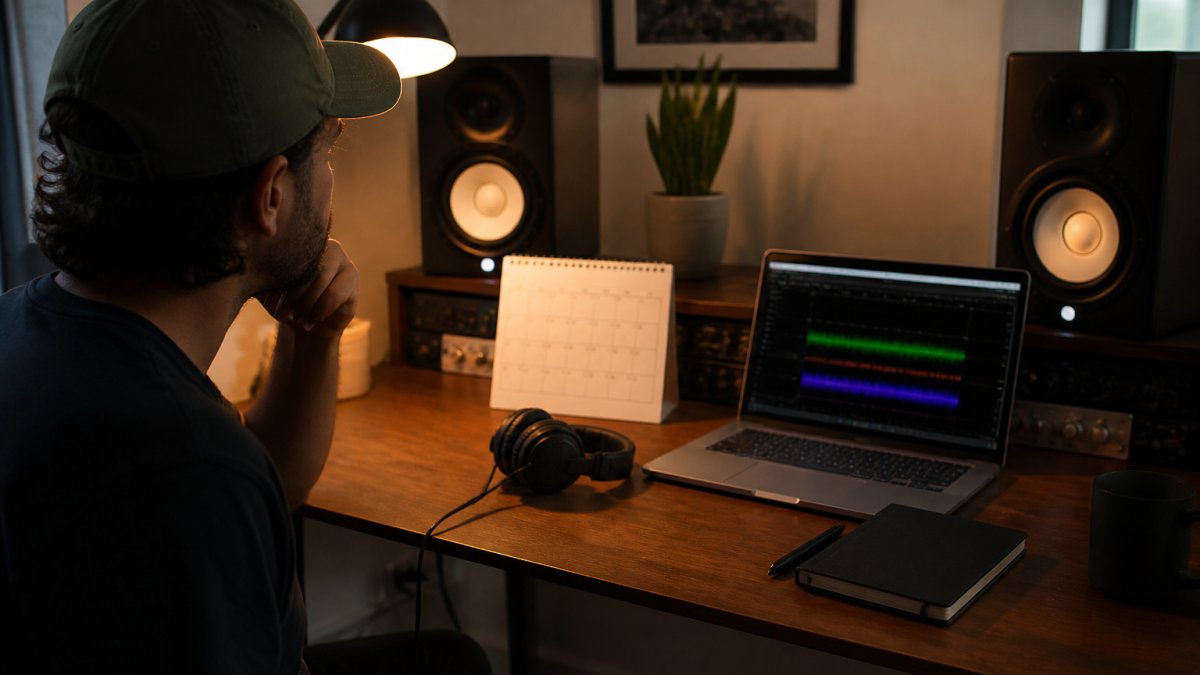
Fast turnaround is achievable when a provider runs a tight remote workflow. Slick Sound Productions is built for artists on tight deadlines, with reliable communication so you always know where your track sits in the queue.
How to Prepare a Song for Mastering
Preparing a song for mastering correctly saves money and revisions, because a clean mix needs less corrective work at the final stage. Hand over a mix that's technically sound and creatively finished, so the engineer can focus on the master rather than fixing problems.
- Leave headroom on the master bus so the engineer has room to work
- Remove any limiter or heavy compression from the mix bus
- Label your files clearly with track name and version
- Export at the highest sample rate your session supports
- Include reference tracks that capture the sound you want
If your recordings are rough, Slick Sound Productions offers audio clean-up services that can reduce noise, clicks, and hum, and tune vocals before mastering. That's a real advantage for home-studio artists.
Why Choose Slick Sound Productions for Your Master
Choosing a mastering provider comes down to trust: will they understand your creative vision, deliver on time, and stand behind the result?
Our work covers high-quality audio enhancements, noise, click, and hum reduction, vocal tuning, and volume leveling, with alternative versions and multiple sample rates supported.
Want to hear the difference before you commit? Ask about our free demo mix offer.
Conclusion
Budgeting for mastering shouldn't feel like guesswork. Compare quotes on deliverables, revisions, and turnaround, not just the headline per-track rate, and factor the mastering window into your release plan early. If you want a provider that communicates clearly, turns work around fast, and includes revisions as standard, get started with Slick Sound Productions and hear what your tracks can sound like.
Frequently Asked Questions
How much does it cost to master a song online?
Online music mastering service cost depends on the provider, the number of tracks, turnaround time, and how many revisions are included. Pay-per-track pricing usually sits at the lower end, while subscription plans spread cost across several releases. Human mastering priced per track generally costs more than automated AI mastering because an engineer listens, adjusts, and checks the final master. Slick Sound Productions does not publish fixed rates, so request a quote for your track count and deadline.
What affects the cost of online music mastering?
The main factors are track count, whether you need a single or a full album or EP, turnaround time, and revision policy. Faster delivery and unlimited revisions usually raise the price per track. Whether the work is automated AI mastering or human mastering also changes the rate. File handling, alternative versions, and multiple sample rates can add cost too. Ask each provider what is included before you compare headline prices, because a low per-track rate with no revisions can end up costing more.
Is AI mastering cheaper than professional mastering?
Yes, AI mastering is usually cheaper per track because the process is automated and needs no engineer time. The trade-off is judgment: an algorithm applies preset loudness, EQ, and limiting, while a mastering engineer listens to your genre, mix, and release goals and adjusts by ear. For a quick demo or a rough reference, AI can work. For a release you want to pass distributor checks and sound consistent across streaming platforms, professional mastering gives you a human review and revisions.
How long does online music mastering take?
Turnaround depends on the provider and your deadline. Automated AI mastering can return a master in minutes, while human mastering typically takes a few business days per track or project. Rush options exist but often cost more. Before you book, confirm the delivery date in writing and ask how revisions affect it. If you have a distributor deadline, build in time for one revision round so a small change does not push your release date.