 how-to
How to Choose a Mixing Engineer: A Beginner's Guide
Table of Contents
- What Is a Demo Mix and Why It Matters
- Understanding the Role of a Mixing Engineer
- How to Prepare Tracks for Professional Mixing
- Evaluating a Mixing Engineer's Portfolio and Sonic Signature
- Questions to Ask a Mixing Engineer Before Hiring
- How to Choose a Mixing Engineer That Fits Your Budget and Timeline
- Red Flags to Avoid When Selecting a Mixing Engineer
- Why Slick Sound Productions Is the Right Choice for Your Mixing Needs
- Frequently Asked Questions
Last Updated: October 21, 2026
What Is a Demo Mix and Why It Matters
A demo mix is a preliminary, often 30-60 second version of your track that a mixing engineer creates to show you their sonic signature before you commit to the full project.
It's a creative preview: you hear how the engineer interprets your music before investing time and money. This matters because mixing is deeply personal, what sounds right to one engineer might clash with your creative vision.
At Slick Sound Productions, we offer a free demo mix. This lets you experience our approach firsthand. You'll hear how we handle your vocal clarity, low-end management, and stereo image. No guessing. No surprises.
Understanding the Role of a Mixing Engineer
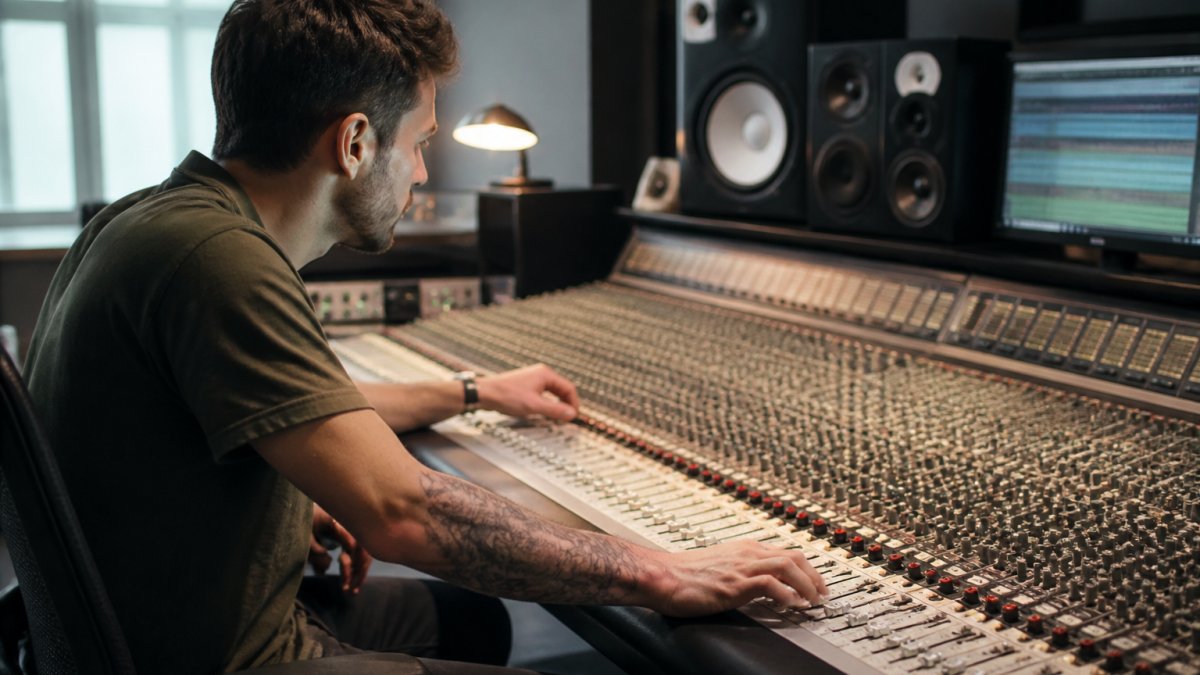
A mixing engineer takes your raw recordings and blends them into a cohesive, professional-sounding track by adjusting levels, adding effects, controlling dynamics, and shaping the overall sonic aesthetic.
Here's what they actually do day-to-day:
- Balance track volumes so every element sits right in the mix
- Apply gain staging to prevent clipping and maximize signal flow
- Add compression, EQ, and other plugin processing to shape individual sounds
- Create depth with reverb, delay, and spatial effects
- Manage the stereo image so your mix sounds full and dimensional
- Control dynamic range so quiet parts stay audible and loud parts don't distort
- Prepare stem delivery files for mastering
The role requires both technical skill and creative judgment. An engineer needs to understand signal flow, harmonic distortion, frequency balance, and DAW compatibility, but also listen to your creative vision and serve it, not override it. Mixing isn't just "making it louder"; it's about clarity, balance, and bringing out the best in your recordings.
Mixing vs. Mastering: Know the Difference
Mixing and mastering are separate processes, and they require different skills.
Mixing takes your individual tracks and blends them into one stereo file, where your vocal gets clarity, your drums get punch, your bass gets definition.
Mastering takes that mixed stereo file and optimizes it for distribution.
Think of it this way: mixing is about making your song sound good. Mastering is about making sure it sounds good everywhere.
Many artists skip mastering or try to do it themselves. Professional mastering catches issues a mixing engineer might miss, ensures your track passes distributor checks, and translates well on different speakers.
How to Prepare Tracks for Professional Mixing
Before you choose a mixing engineer and send files, preparation matters. Poor file organization wastes time and costs money.
Start by organizing your session.
Export all tracks at the same sample rate and bit depth. Most engineers work in 44.1 kHz or 48 kHz. Check with your engineer first.
Remove any clicks, pops, or obvious noise before sending. Don't over-process, just clean up the worst artifacts. A mixing engineer can handle imperfect recordings.
Provide a reference track, a professional song in your genre you want your mix to resemble.
Essential File Requirements Checklist
Before hitting send, verify these technical requirements:
- All tracks exported as WAV files (not MP3 or compressed formats)
- Consistent sample rate across all files (check with engineer first)
- 24-bit depth or higher (16-bit minimum)
- No clipping or distortion on any track
- Each track clearly labeled with instrument name
- Tracks organized by instrument family (drums, vocals, bass, etc.)
- All tracks start at the same timeline position
- No silent tracks included (remove unused recordings)
- Session file included if using DAW-specific format (Pro Tools, Logic, etc.)
- Backup copy of all files retained on your end
- A notes file with BPM, key, reference tracks, and creative direction
Evaluating a Mixing Engineer's Portfolio and Sonic Signature
Listen to at least five completed mixes from any engineer you're considering. Listen actively and ask yourself: Does this sonic signature match what I want?
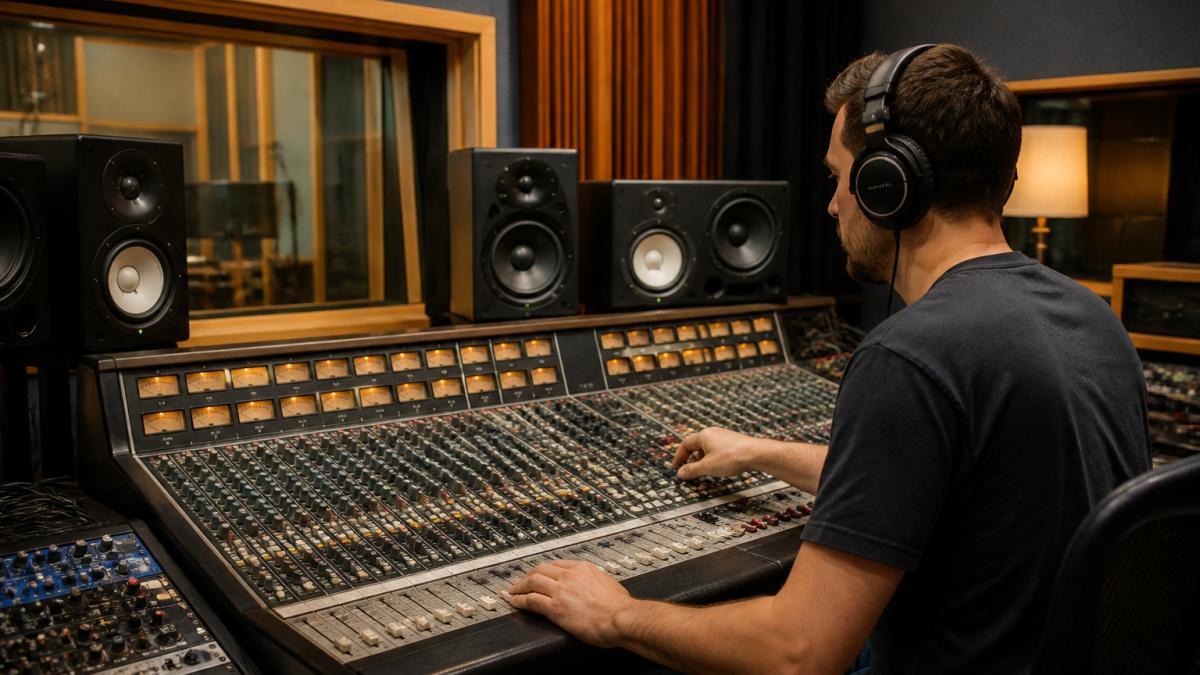
A sonic signature is the engineer's distinctive approach to mixing. Some prefer a clean, transparent sound; others favor a warmer, colored tone. Some emphasize vocal clarity; others prioritize low-end punch.
Your job is to find an engineer whose signature aligns with your creative vision.
Listen for these specific qualities in their portfolio:
- Vocal clarity: Can you hear every word? Does the vocal sit well without sounding isolated?
- Low-end management: Is the bass controlled and defined, or muddy?
- Stereo image: Does the mix feel wide and dimensional, or flat and narrow?
- Dynamic range: Do quiet parts stay audible? Do loud parts have impact without distortion?
- Frequency balance: Does any instrument dominate? Do all elements blend well?
- Plugin processing: Can you hear their effects choices? Are they subtle or obvious?
- Genre fit: Do they have experience in your specific genre?
Ask the engineer directly about their approach: how they handle gain staging, their philosophy on harmonic distortion, whether they mix in-the-box or on an analog console, and their revision process.
Questions to Ask a Mixing Engineer Before Hiring
Before you commit, ask these questions. The answers tell you whether an engineer is right for your project.
-
What's your mixing process? Do they start with gain staging and signal flow? How do they approach EQ and compression? This reveals their technical foundation.
-
How many revision rounds are included? Clarify this upfront.
-
What file formats do you deliver? Do they provide stems for mastering? What sample rates do they support? What's your DAW compatibility?
-
What's your turnaround time? Be specific about your deadline. Can they meet it? Do rush fees apply?
-
How do you handle creative feedback? Will they explain their mixing choices? Are they open to direction, or do they prefer creative control?
-
What's your communication process? How often do you check in? Do they use email, phone, or video calls? How responsive are they?
-
Do you require a deposit?
-
What happens if I'm not happy with the mix? Know the revision policy and any additional costs.
Creative Vision and Communication Expectations
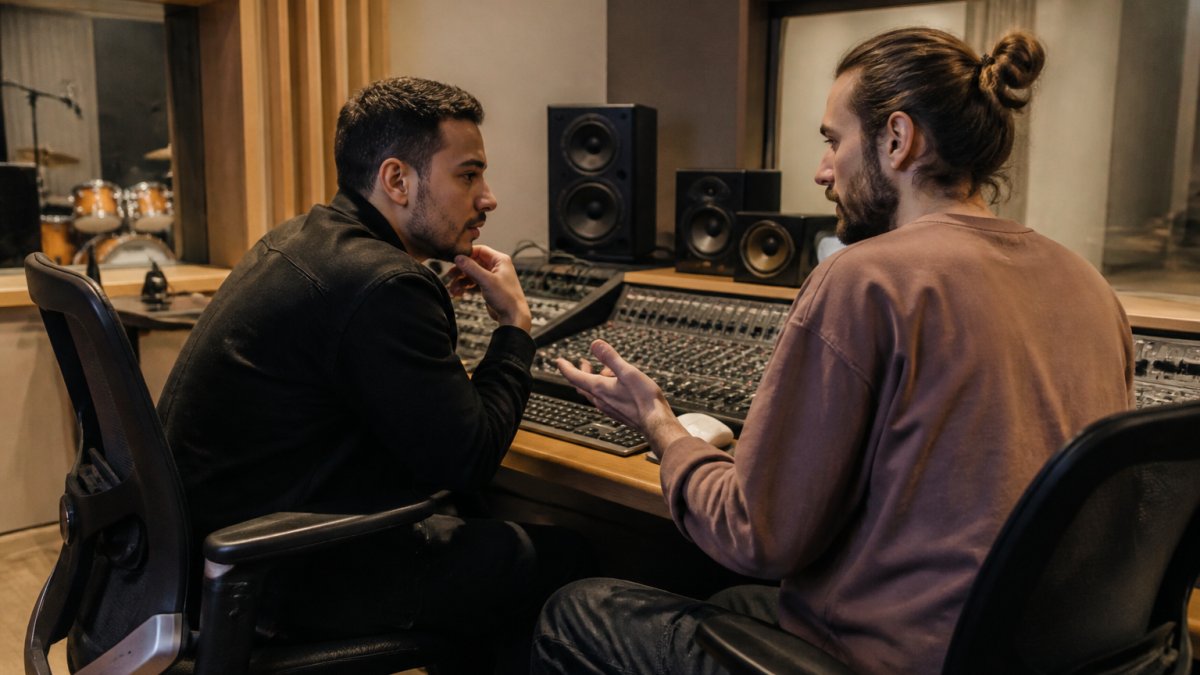
This is where many artist-engineer relationships break down. You have a vision; the engineer has their own approach. Without clear communication, you end up with a mix that doesn't match what you imagined.
Before starting, have a detailed conversation about your creative direction. Don't just say "I want it to sound professional." That's too vague.
Be specific:
- Play reference tracks and explain what you like about them
- Describe your sonic aesthetic in concrete terms: "warm and punchy," "clean and transparent," "aggressive and distorted"
- Explain what each element should sound like: "I want the vocal to sit up front and be crystal clear," "I want the bass to drive the low end," "I want the drums to have serious punch"
- Share your creative intent: What emotion should this track evoke? What's the story?
The engineer should ask follow-up questions. If they don't, that's a red flag. A good engineer wants to understand your vision before they start mixing.
Use them strategically: focus on the biggest issues first, get the overall balance right, then refine details.
Technical Requirements and Turnaround Time
Turnaround time varies by engineer and project complexity. Discuss expectations upfront, if you need a five-day turnaround, confirm the engineer can deliver before you hire them.
Ask about their DAW compatibility. Do they work in Pro Tools, Logic, Ableton, or other software? Do they need your session file, or just stems?
Clarify the stem delivery format. Most engineers deliver a stereo mix plus individual stems (drums, vocals, bass, instruments, etc.) for mastering. Confirm this is what you're getting.
Know their file transfer protocol. Do they use cloud storage, email, or file transfer services? How long do they keep files? What happens if you need revisions after delivery?
How to Choose a Mixing Engineer That Fits Your Budget and Timeline
Budget and timeline are practical constraints. You need an engineer who can deliver quality work within your limits.
Mixing prices vary widely based on experience, equipment, and project complexity. Don't hire on price alone.
Set a realistic budget, then find the best engineer within it. Plan ahead and give your engineer at least two weeks' notice to avoid rush fees.
Ask about package deals. At Slick Sound Productions, we provide free revisions included with every mixing project. This saves you money if you need adjustments.
Compare what's included in each engineer's pricing. Does it include revisions? Stem delivery? Multiple sample rates? Free demo mix? These add-ons affect the real value you're getting.
Red Flags to Avoid When Selecting a Mixing Engineer
Some warning signs indicate an engineer might not be right for your project.
Red flag: No portfolio or vague examples. If an engineer can't show you completed work, be cautious.
Red flag: No revision policy. If they refuse revisions or charge extra for every adjustment, they're not prioritizing your satisfaction.
Red flag: Unclear pricing. If they won't give you a clear quote upfront, you might face surprise charges later.
Red flag: Pressure to decide immediately. A good engineer doesn't pressure you. They're confident in their work and happy to answer questions.
Red flag: No experience in your genre. An engineer skilled in rock might struggle with electronic music.
Why Slick Sound Productions Is the Right Choice for Your Mixing Needs
Here's what sets us apart:
Free demo mix: Before you commit to a full project, we create a free demo mix. You hear exactly how we approach your music. No surprises. No guessing.
Fast turnaround: We know you're on a deadline. We prioritize reliable communication so you know exactly where your project stands.
Free revisions included: We include free revisions with every mixing project. If something doesn't match your vision, we adjust it.
Affordable quality: We provide professional mixing. You get studio-quality results.
Genre experience: We've mixed rock, indie, hip-hop, electronic, pop, country, and podcast audio. We understand the sonic requirements of different genres.
Transparent communication: You'll know exactly what to expect. We explain our mixing choices, respond to feedback, and deliver what we promise.
Frequently Asked Questions
What is a demo mix and how does it help me choose a mixing engineer?
A demo mix is a preview version of your track that shows how an engineer approaches your music. It demonstrates their mixing style, understanding of your creative vision, and technical capability without requiring full payment. Many mixing engineers offer free demo mixes so you can evaluate their sonic signature and communication style before committing. This gives you confidence that they understand what you're trying to achieve and can deliver the results you want.
What questions should I ask a mixing engineer before hiring?
Ask about their experience with your genre, turnaround time, revision policy, and how they handle feedback. Inquire about their mixing process, the DAW they use, and whether they can deliver stems or alternative versions. Ask how they communicate during the project and what file formats and sample rates they support. Understanding their workflow and collaboration style ensures you'll work well together and get the results you need.
How do I prepare tracks for professional mixing?
Organize all tracks in your DAW with clear naming conventions (e.g., 'Vocal Lead', 'Bass', 'Drums Kick'). Export each track as an individual audio file, remove any unused tracks, and ensure consistent gain staging across all channels. Label any tracks that need special attention, include a rough mix reference, and provide detailed notes about your creative vision. Clean up obvious background noise and clicks before sending, and include all necessary files at the correct sample rate and bit depth your engineer requires.
What should I look for in a mixing engineer's portfolio?
Listen for clarity in vocal delivery, balanced frequency response, and a defined stereo image that suits the genre. Check if their portfolio includes work in your specific genre and at a similar production level to your own. Look for consistency in audio fidelity and professional production quality across multiple tracks.
Your mixing engineer shapes how your music sounds to the world. Choose someone who understands your creative vision, communicates clearly, and delivers professional results on time. Start with a free demo mix to test compatibility. Ask the right questions. Evaluate their portfolio carefully. Then make your decision.
Ready to get your tracks mixed? Book a session with Slick Sound Productions and start with a free demo mix. Let us show you how we can bring your creative vision to life.